

Liverpool is a port city with a long history. This beautiful, ancient, and vibrant city on England’s north-west coast is a source of great interest to tourists. Travellers visit it regularly, admiring the architecture and delving into its history. Today, we’ll talk about the Port of Liverpool. A port is a section of a sea coast or other body of water that is protected from bad weather by buildings. These buildings are typically used for unloading cargo, storing goods, and so on. Read more about the history of the Port of Liverpool and the development of port operations in England on the liverpool-future.com website.
The history of the city’s vital infrastructure
It’s no secret that a port is a vital part of a city’s infrastructure. It’s through the harbour that a city can develop and thrive. The Port of Liverpool was founded in 1207 by order of King John Lackland, who decided to create a harbour in an existing settlement. This decision had a positive impact on the area’s development: fairs were held regularly, and new merchants arrived.
The city itself began to flourish during the British Empire era, when exotic goods and slaves arrived. Incidentally, the slaves were also Liverpool’s first immigrants.
It wasn’t until 1715 that the first dock was built, and Liverpool later became one of England’s largest ports. Shipbuilding also developed rapidly in the city.
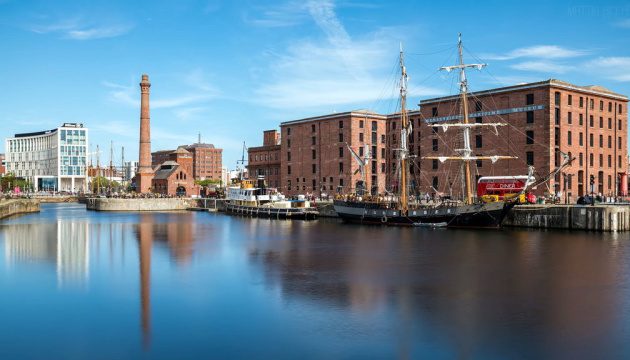
The development of the Port of Liverpool
The Port of Liverpool gave the city an incredible boost. A canal was dug to connect Liverpool with Manchester. Additionally, around 40% of Europe’s foreign trade passed through our city, which is why many port technologies were first implemented here. They were later adopted by other countries around the world. For this reason, the Port of Liverpool was included on the World Heritage list in 2004. Furthermore, six areas in the city centre, covering more than 136 hectares, are protected by UNESCO.
An unfortunate incident occurred in 2009: a new marina building blocked the view of historic architectural buildings. For this, it was awarded the prize for the ugliest building of the year. The press was full of reports about the vandalism of the port, but the city council insisted on the new structure, claiming it was necessary for the port’s development. It’s important to note that this situation did not go unnoticed. In 2021, UNESCO stripped the Port of Liverpool of its World Heritage Site status. The maritime facade had lost its architectural integrity due to the mass development. The Port of Liverpool is only the third site in the world to be removed from the UNESCO list.
A history of England’s ports
It’s worth noting that the Port of Liverpool is not the oldest port in England. The history of the Cinque Ports, a powerful driving force for the economy and military in the Middle Ages, is well-known. It is not known for certain when this alliance was formed, but historians believe it existed before 1066. The alliance of ports was first mentioned in 1155.
The Cinque Ports alliance initially included Dover, Hastings, Hythe, New Romney, and Sandwich. It was later joined by the towns of Rye and Winchelsea. In the 14th century, the alliance gradually began to decline. Some of the harbours silted up with sand and lost their importance. All efforts to strengthen the alliance were in vain. In the 16th century, the Royal Navy was created, and the Cinque Ports lost their significance to England.
The Port of Liverpool is an important part of the city, as it played a significant role in its time. In addition, it is an ancient architectural landmark and a part of the city’s history. That is why tourists love to visit it.
We hope you found this article informative and learned more about the city.