
It was the mid-19th century. Liverpool was growing, developing, and demanding new solutions in trade, transport, and architecture. It was here that architect Peter Ellis took a step that many considered crazy: creating an office building with an almost entirely glass facade. In this article, liverpool-future.com will tell you why this was a true innovation and how it influenced the look of the modern city. You will also learn:
- why Liverpool became the perfect site for this architectural experiment;
- which details and “texture” of the glass facade made the buildings unique;
- how Peter Ellis’s innovation influenced architects in Britain and the USA.
You’ll see that the story of glass facades is another illustration that you often need the courage to defy established traditions.
Liverpool in the Mid-19th Century and the Demands of the Time
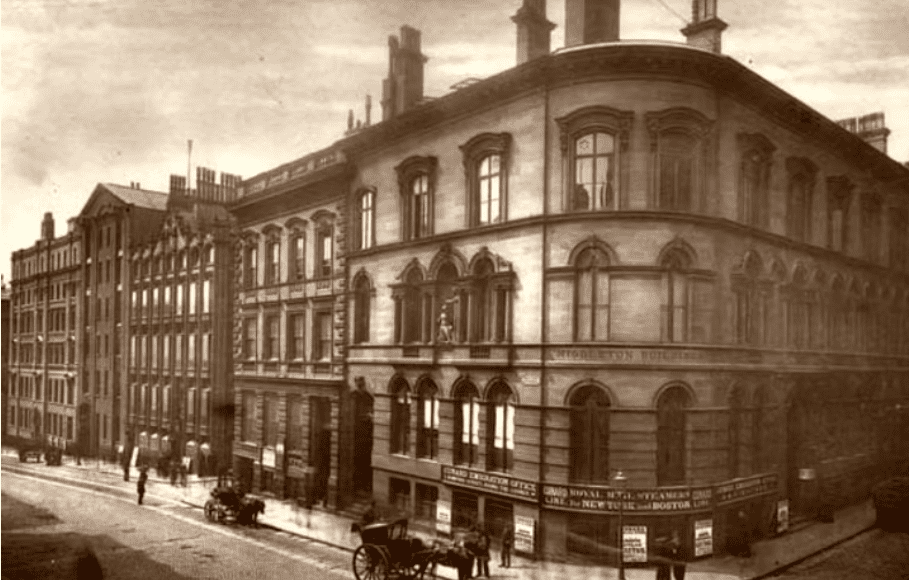
In the mid-19th century, Liverpool was one of Europe’s most dynamic cities. Its port handled a significant portion of British trade, from American cotton to Asian spices. Banks, insurance companies, and office blocks were springing up on the streets. This was an era when business needed space, and architecture had to meet new demands: more light, better ventilation, and efficient layouts.
The usual stone and brick buildings could no longer cope with these tasks. For a city that considered itself the “gateway to the empire,” this was not enough. Liverpool wanted its offices to be not only functional but also to reflect its status and ambitions.
At this time, architect Peter Ellis came to the fore. A native of Liverpool, he had been closely following the new possibilities of cast iron and glass. In 1864, he designed Oriel Chambers, an office building with a facade where rows of glass oriel windows were placed one after another. They seemed to grow out of the wall’s surface, forming a distinctive “facade of glass and light.”
For his contemporaries, this was a shock. Critics called the facade a “collection of glass bubbles,” and some even an “architectural monstrosity.” However, behind the shine of the glass lay a true innovation: thanks to the metal frame and large windows, the interiors received significantly more light than traditional stone offices. For the first time, employees could work in daylight.
So, Oriel Chambers challenged the established norms. It seemed to declare: Liverpool is a city of the future, where architecture bravely goes beyond the usual. And Peter Ellis himself became an innovator who dared to implement this idea despite mockery and criticism.
The Innovation of the Glass Facade: Details and Texture
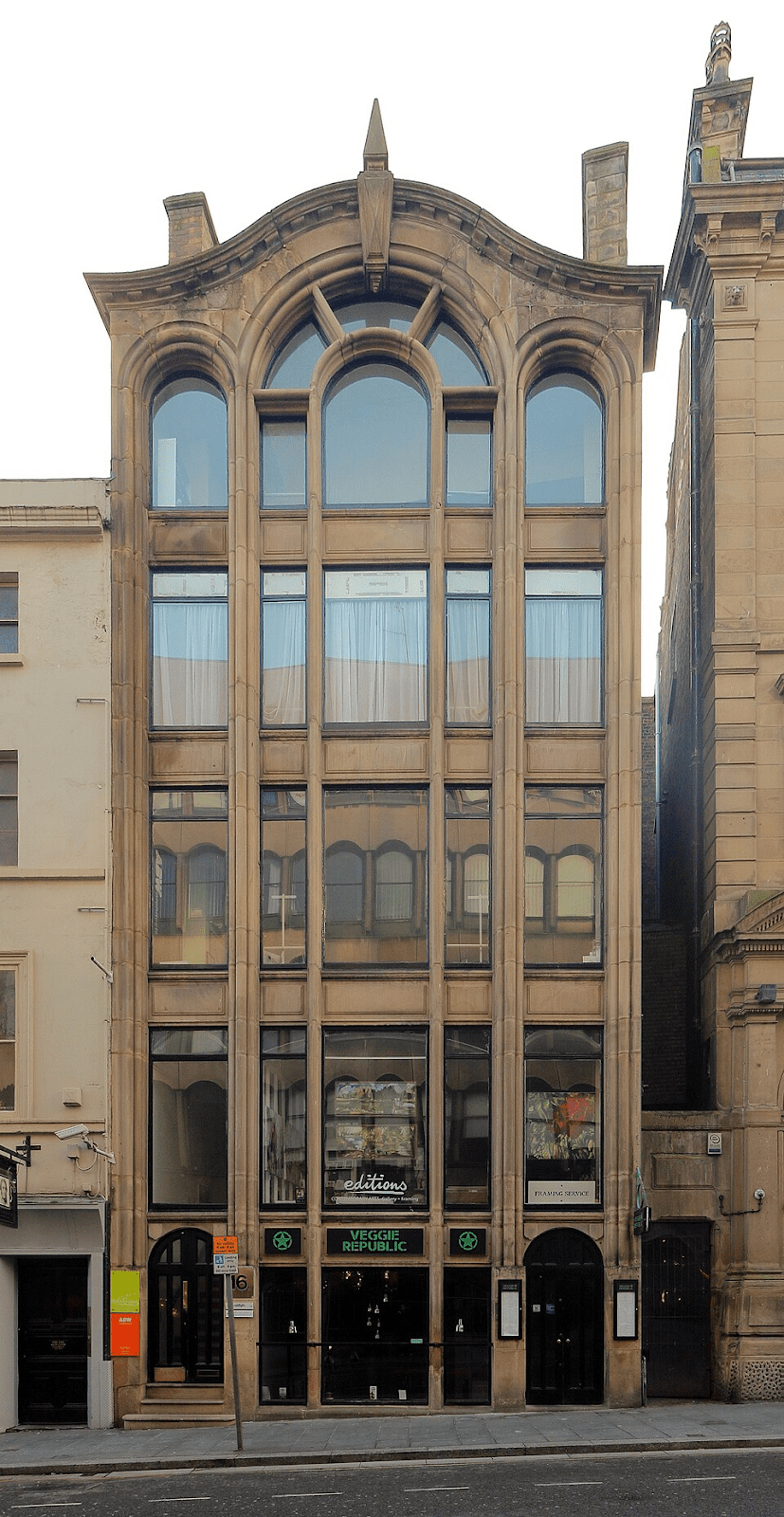
When we talk about Peter Ellis’s innovation, it’s important to see not just the general idea of a “glass wall” but also what it was specifically made of.
The core of the structure was a cast-iron frame. This allowed him to take some of the load off the stone walls and “hang” large panes of glass on it. Instead of massive openings, Ellis used oriel windows — glass bays that protruded from the facade’s surface. They added rhythm to the building and let in more light.
These solutions can be described as the first architectural details of a glass facade in history:
- a cast-iron frame that became the building’s invisible “skeleton”;
- individually suspended glass sections assembled into a rhythmic pattern;
- oriel windows that seemed to open the facade outwards.
And how was it perceived from the outside? The texture of the glass facade was important here. Instead of a smooth stone surface, the viewer saw a play of light and reflections. The sun reflected off the glass panes, and the facade changed depending on the weather and time of day. This was so unusual for mid-19th century Liverpool that strict critics saw it as a “strange set of glass bubbles.”
So, Ellis showed that the details and texture of a facade can determine a building’s character. This was the first step towards an architecture where transparency and lightness became symbols of modernism.
Peter Ellis’s Influence and Legacy
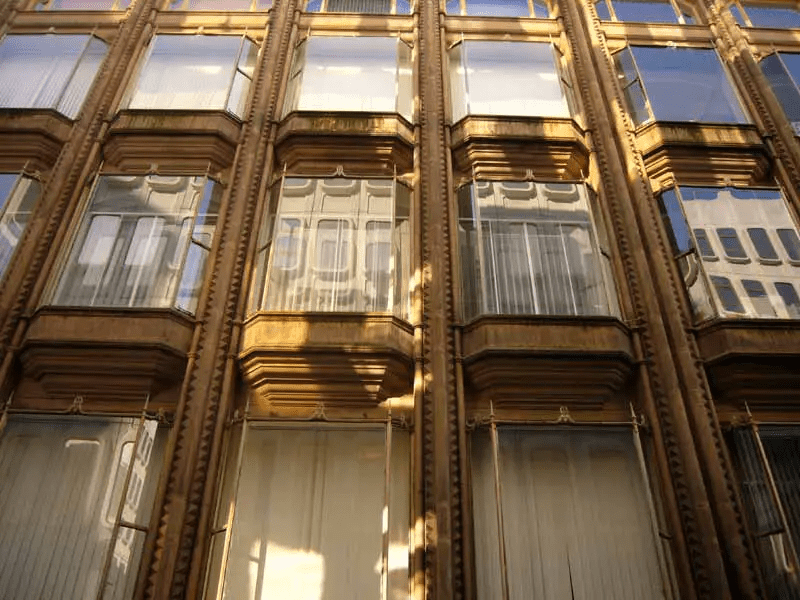
Oriel Chambers was not a solitary experiment. Just two years later, in 1866, Peter Ellis completed a second building at 16 Cook Street. It also had a glass facade, but it opened the interiors to the outside even more boldly. For the offices of that time, this was revolutionary: they were filled with light, and the facades themselves looked as if they were made of transparent modules.
However, contemporaries were in no hurry to applaud. Many called Ellis’s work strange, even ugly. In a review of Oriel Chambers, the well-known magazine The Builder even used the word “abortion” to mean “architectural monstrosity.” But over time, critics changed their tune. In the 20th century, the British architectural historian Quentin Hughes called Oriel Chambers “one of the most important buildings in the world,” as it anticipated modernism by decades.
Most interestingly, Ellis’s influence was not limited to Liverpool. At that time, the future American architect John Root was studying in the city. He would later become one of the creators of the Chicago school and the first skyscrapers. The architectural methods he saw in Liverpool — oriel windows, light metal frames, and the play of light on glass — echo the buildings of late 19th-century Chicago.
But Ellis’s innovation was not limited to facades. It was in Oriel Chambers in 1869 that one of Britain’s first pantoster-type lifts appeared — another bold idea from Ellis that highlighted his focus on innovation. It is no surprise that the Guinness Book of Records would later name this building the oldest surviving example of an office with a glass curtain wall — the name for a wall that is hung from a frame like a curtain.
So, although Ellis’s career was not long, his legacy proved to be much more significant than one might think if judging superficially. He became the “invisible bridge” that connected Victorian Liverpool with 20th-century modernist architecture.
From 19th-Century Liverpool to a City of the Future
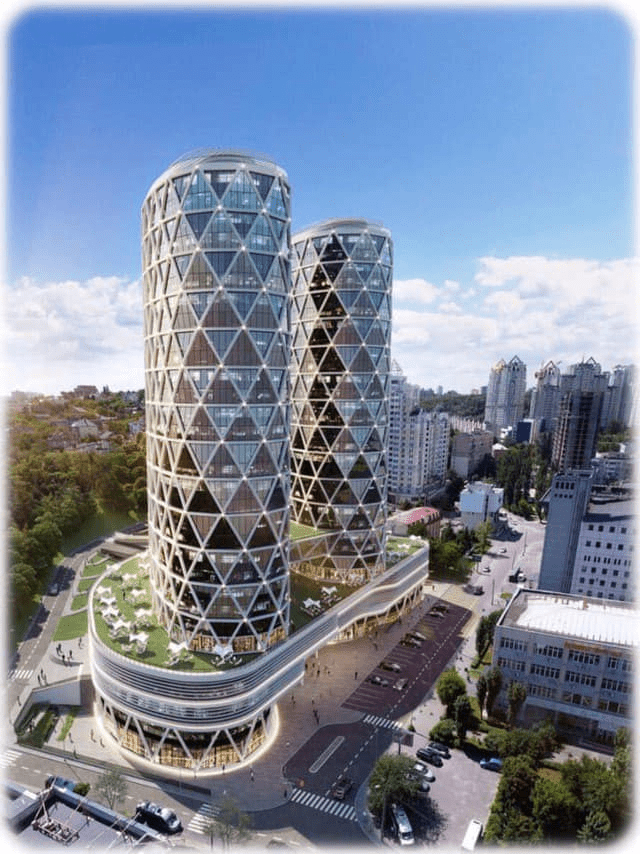
Peter Ellis’s glass facades were a bold experiment that was later recognised as a symbol of a new era. They changed the perception of what office spaces could be: bright, open, with a sense of spaciousness instead of heaviness and darkness. For Liverpool, it became a showcase of courage — the ability to venture into solutions the world had not yet seen.
Today, Oriel Chambers and the building at 16 Cook Street remain historical monuments but also serve as architectural messages to the future. Their details and the texture of their glass facades remind us that transparency and light are important elements that shape the modern city. Liverpool, which in the 19th century risked a step into the unknown, now positions itself as a “city of the future.”
It’s no coincidence that architecture helps to underline this image. Today’s business centres and cultural spaces in Liverpool largely follow Ellis’s ideas: openness, glass, and lightness of structures. Therefore, his innovation can be seen as a kind of “prophetic window” — what was once ridiculed has become the norm for global architecture.
And if you look at the story more broadly, it’s clear: a bold architect from Liverpool proved that a city can set trends on a global scale. His glass facades became that bridge from the Victorian past to the innovative present — and on to the future.
However, it is worth noting that Liverpool’s architecture has always combined bold experiments with a respect for tradition. And if the glass facades of Peter Ellis’s offices became a breakthrough towards modernism, the designs of our city’s churches remind us of its deep historical roots.

