

In a Liverpool suburb, nestled among the greenery of one of the city’s largest parks, lies an architectural mosaic spanning over four centuries: Croxteth Hall. This estate, which survived the Tudor, Queen Anne, Georgian, and Victorian eras, and even a fire in the mid-20th century, is a living encyclopedia of English country house architecture. Its facades are like pages of history, where each era left its signature, and every expansion sought not to destroy, but to complement what had already been created. We’ll tell you more about this historic architectural masterpiece on liverpool-future.com.
Origins and early features (Tudor beginnings)
In 1575, a small hunting lodge appeared on the edge of the rural West Derby lands. It was built for the Molyneux family (read about their rivalry with the Stanley family here). This house was the beginning of what would later become the magnificent Croxteth Hall. It began as a hunting residence and later grew into a full-fledged family home. Its growth was gradual: new additions appeared so as to organically complement the previous parts without disrupting the overall harmony.
Tudor style is where it all began. At Croxteth Hall, it’s evident in its restrained Gothic features: tall chimneys, steep roofs, and rectangular windows with stone lintels. All of this is reminiscent of a time when English estates were considered symbols of power and taste, incredibly cosy homes that were beautiful both inside and out.
At that time, the land around the house was a vast agricultural estate, full of horses and cattle. Commoners had no access to it; the area belonged only to Lord Sefton and his guests. Their leisure time didn’t include work. Hunting, shooting, and loud feasts—that was their world. The palace was a stage, and the lord was the director of his own parade of luxury.
It was within these boundaries that the history of Croxteth Hall began to take shape—a home where the architecture always told a story that went beyond simple taste or era. It spoke of status, ambition, and a vision of eternity.
The influence of the Queen Anne era
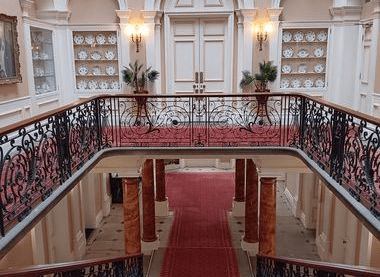
At the turn of the 17th and 18th centuries, Croxteth Hall underwent a significant transformation that marked a new stage in its development. In 1702, the main western facade was built in a style befitting the Queen Anne era. Although named after the monarch who reigned from 1702 to 1714, this style actually emerged a little earlier, incorporating features of English Baroque and Palladian traditions.
The facade is distinguished by its symmetry, clean geometry, and restrained decor. It was during this time that harmonious proportions, vertical windows with small panes, and an emphasis on the centre of the building, such as entrance portals or projecting wings, began to prevail in the architecture of aristocratic houses. At Croxteth Hall, this influence is evident in the balanced arrangement of the windows, the lack of unnecessary ornaments, and the equilibrium between the building’s scale and its details.
Such changes enhanced the estate, making its appearance consistent with the tastes of the elite of that time. The western facade became a kind of calling card for the home, which increasingly resembled not a medieval manor but the country residence of an English gentleman from the Age of Enlightenment.
Georgian additions, Victorian and Edwardian innovations
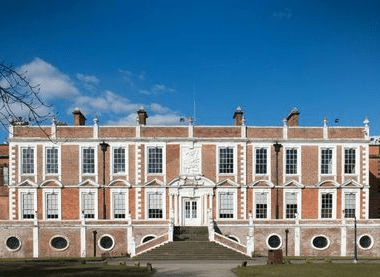
Although the foundation of Croxteth Hall belonged to the Queen Anne era, its face changed along with the architectural tastes of the following centuries. The Georgian period, which began in the 18th century, brought a new wave of order: strict proportions, symmetrical facades, and the same characteristic windows with small rectangular panes that are so easy to recognise. This was a time when form ceased to be merely a function and instead became a language—a language of harmony and confidence.
The Victorian era, with its love of detail and decorative elements, did not destroy this harmony but, on the contrary, made it even more fascinating. In 1874, a guest wing was added to the estate. Its proportions were maintained so as not to disrupt the overall rhythm, but at the same time, the new building brought warm notes of hospitality, while the main residence retained its formal composure.
And a little later, John Douglas took over—an architect who knew how to play with space without betraying tradition. His designs added kennels (which look more like a fairy-tale cottage than a place for dogs), orangeries where exotic plants spent the winter, and a garden fence that framed the estate as if it were a multi-layered frame for a painting.
And although each addition represents a different era and a different style, the entire composition is held together in a surprising way. It’s as if each new touch respected the previous one, not shouting over it, but complementing it.
An architectural mosaic and its preservation
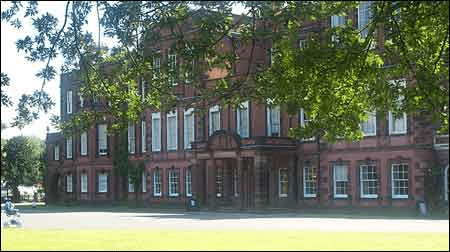
Croxteth Hall is an architectural chronicle in stone, wood, and glass. Styles from four centuries are intertwined here: from the Baroque composure of Queen Anne to the Gothic flourishes of the Victorian age and the functional forms of the Edwardian era. But the important thing is not that they are different, but how they managed to coexist.
This harmony was not accidental. Each addition was designed so that it wouldn’t shout over the previous one. Instead of contrasts, there’s a dialogue. The architects worked with the same materials: red brick, limestone inlays, and slate roofs. This created a sense of a single body, despite the stylistic diversity. You could say it’s an architectural mosaic where there are no unnecessary fragments.
A real test came with the fire in 1952, which destroyed a significant part of the main building. But even this was not a full stop, but a comma. The estate was restored, preserving its historical face. And in 1972, Croxteth Hall was awarded Grade II status, which means the building has special historical and architectural significance. Since then, every nail and every restoration has been controlled with surgical precision.
The surrounding area: park, farm buildings, and its role in the city
The name Croxteth is also associated with one of Liverpool’s largest parks, which serves as a wonderful complement to the building mentioned above. This green space covers nearly 200 hectares that literally breathe with the city. The former hunting grounds have been transformed into an open recreational area for residents: there are ponds, meadows, avenues, and fragments of wild nature that have surprisingly managed to be preserved.
The former farm buildings—the stables, aviaries, and ice houses—now function as part of a farm museum. There’s even a real, small farm where you can feed goats and see old agricultural equipment.
The significance of Croxteth Hall
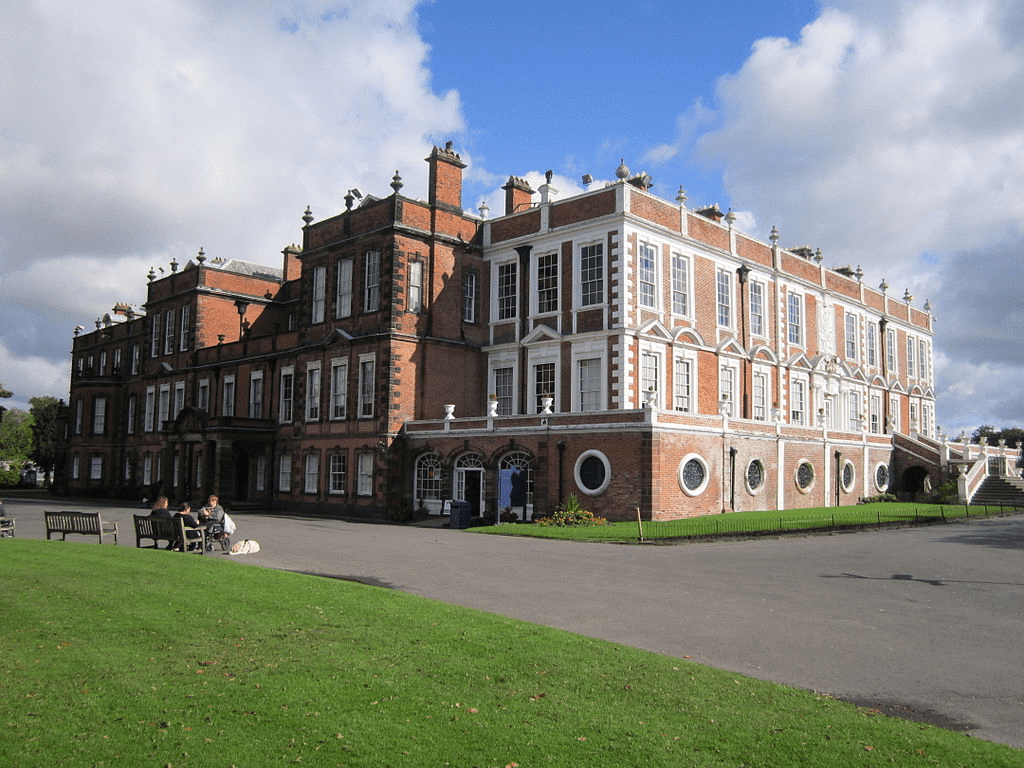
In addition to its architectural significance, Croxteth Hall has become a symbol of the changes that have taken place in Liverpool and in England as a whole. Over the centuries, this estate has reflected the historical changes in the country and the region. Each new generation contributed something of its own, and that is where the value of Croxteth Hall lies. The building is a witness to how one generation gives way to another, not by destroying, but by adding to it. Croxteth Hall, while changing, remained the city’s stone heart, able to respond to the voices of the future.
But most importantly, the complex plays a significant role in the life of the city. Today, it hosts school trips, weddings, community events, and even historical reenactment festivals. The estate has transformed from a symbol of the past into a bridge to the future. It was once a home for aristocrats, and now a piece of the city’s soul lives there. And it seems to feel right at home. “`eof