

The 19th century is well-represented in Liverpool’s architecture. This period is characterised by many buildings being created in the neoclassical style. We’ll discuss on liverpool-future how this architecture came to be, and we’ll also tell you about its greatest example.
A look at Liverpool’s 19th-century neoclassical examples
In Liverpool’s past, there was a period of Georgian architecture. Neoclassicism overlaps with that era and continues until the end of the Victorian period. Here are some early examples of these buildings:
- Thomas Harrison’s Lyceum (1802).
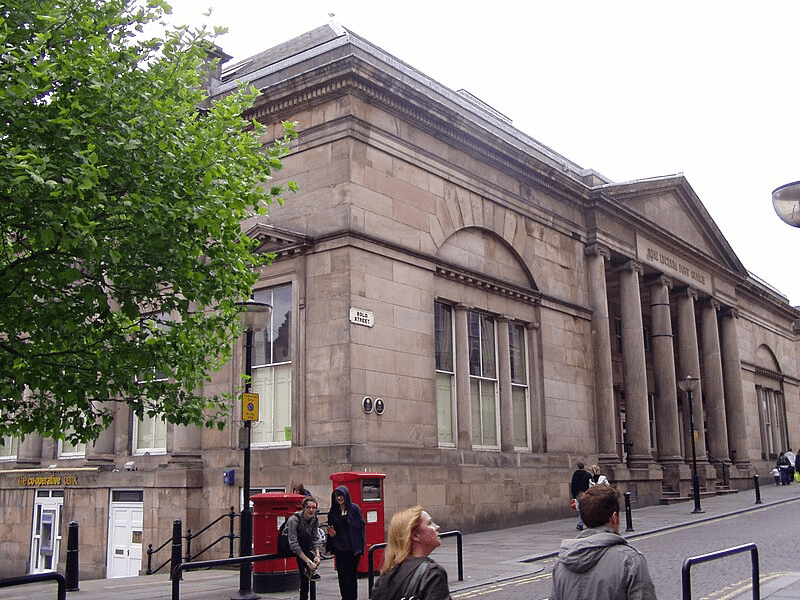
- Edmund Aikin’s Wellington Rooms (1815–1816), a Grade II listed building but in poor condition and at risk of being lost to time.
- The Oratory, in Greek Doric style, designed by John Foster Jr. (1829), who modelled the building on the Temple of Hephaestus in Athens. These are fine examples of Greek Revival architecture.
The Bank of England building, designed by Charles Robert Cockerell between 1845 and 1848, is also impressive. It has been awarded Grade I status. The Liverpool Institute High School for Boys (1835–1837) was designed by the talented architect Arthur Hill Holme. And the Liverpool Medical Institution (built around the same time) was the brainchild of Clark Rampling.
It’s also worth mentioning the unique group of buildings in the High Victorian Neoclassical style around William Brown Street. This beautiful area has been dubbed Liverpool’s “Cultural Quarter.” It’s home to the William Brown Library and Museum (now the Liverpool Central Library and World Museum), built between 1857 and 1860. The man for whom the buildings are named paid for their construction, while Thomas Allom created the architectural design. Interestingly, John Weightman—an engineer who worked for the city council—adapted the design to save money.
However, some buildings may not quite fit the neoclassical mould, such as the County Sessions House, built between 1882 and 1884. This building more closely resembles playful and creative Beaux-Arts architecture.
Several religious buildings in Liverpool also fall into the 19th-century neoclassical category, including St. Bride’s Church and the Great George Street Congregational Church.
St. George’s Hall – the pinnacle of Liverpool’s neoclassical architecture
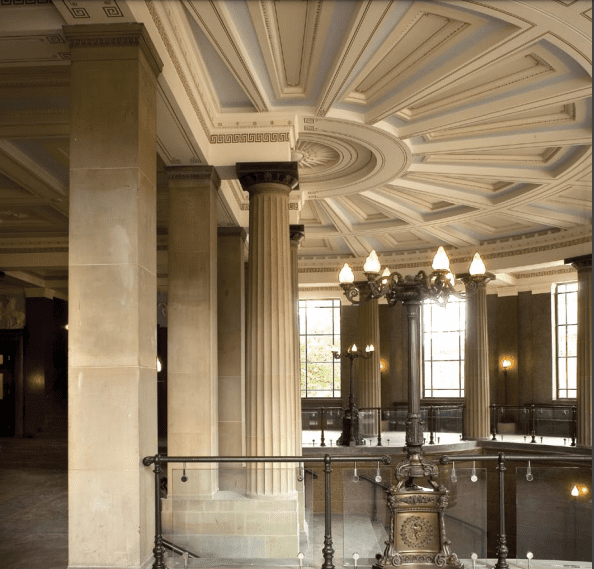
St. George’s Hall, erected between 1841 and 1854 based on designs by Harvey Lonsdale Elmes, deserves a special mention. The architect died young, so Cockerell, who we mentioned earlier, designed the interiors, including the layout for the great hall and the small concert room. The building was described by Sir Nikolaus Pevsner as the greatest neoclassical building in the world, making it an object of national pride. It served as a court and a concert venue, among many other things. Its magnificent architecture is a reminder of Liverpool’s great ambitions in the 19th century.
However, by the late 20th century, the building was a rather sorry sight. Its decline was due in part to the courts having moved elsewhere since 1984. But the efforts of the Prince of Wales in the 1990s led to a major refurbishment plan, which, however, required significant funding—a figure of £23 million was mentioned. The Prince hoped the World Monuments Fund (WMF) would help with the financing. The organisation promised its support, though the money had to be collected from a variety of sources. The restoration took a full decade, but it achieved its goal, and this neoclassical gem shone just in time for Liverpool’s 800th anniversary in 2007. This ensured that the building remained a magnificent living example of 19th-century neoclassical architecture.