

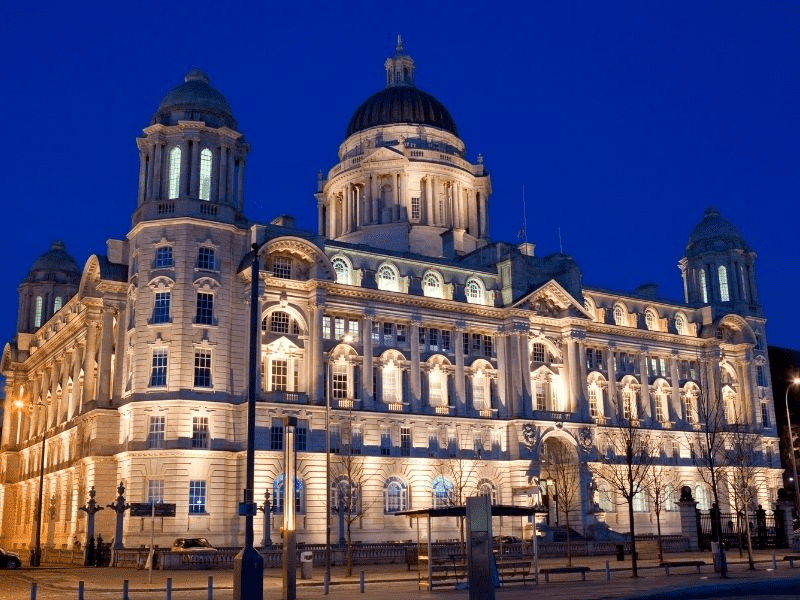
If you walk along the River Mersey waterfront in Liverpool, you’ll find it hard not to notice one of the city’s most famous architectural gems – the Port of Liverpool Building. Its address is easy to navigate – Pier Head, Liverpool. With its magnificent domed tower and richly decorated facades, this masterpiece from the early 20th century has long been a symbol of Liverpool’s maritime glory. But the building is more than just a beautiful photo op. Behind its walls lies a whole era, a history of the people who once managed one of the world’s largest ports. Read more on liverpool-future.com.
Architectural concept and exterior features of the Port of Liverpool Building
When creating the Port of Liverpool Building, the architects chose a style that could convey the grandeur of a maritime empire while fitting into the city’s solid image. They opted for Neoclassicism with distinct Baroque elements. This decision was no accident: at the start of the 20th century, these architectural forms were associated with prestige, stability, and authority.
Neoclassical motifs gave the building a restrained elegance, while the Baroque accents added dynamism and ceremony. The main entrance, columns, and domed tower all worked to create the image of a monumental, almost temple-like structure. These architectural decisions immediately set the tone for the entire Pier Head area, making Liverpool recognisable among port cities worldwide.
Concept development
The idea to erect this building came from a competition announced in 1902, when the Mersey Docks and Harbour Board decided to move to a new headquarters. The competition attracted many designs, but the final choice was a concept developed by architect Arnold Thornely alongside Frank Dock. Their proposal successfully combined the demands of functionality with the desire to create something truly magnificent. The port officials were not content with just an office space. They wanted to use architecture to make a powerful statement about Liverpool’s importance on the world stage.
The design process was not an easy one. The clients made repeated changes, aiming to make the facade even more expressive. The architects had to find a balance between the practicality needed for administrative work and the symbolism of the building’s image. This is why the Port of Liverpool Building features numerous decorative elements—sculptures, window frames, and luxurious portals. It was also decided to give the dome a special importance within the composition.
Shape
The shape of the building resembles a rectangle with clearly defined corner towers and symmetrical facades. This geometry makes the structure look harmonious from any viewpoint. In addition, the rectangular shape made it easier to arrange the internal office spaces and created an impression of unshakable stability.
The dome
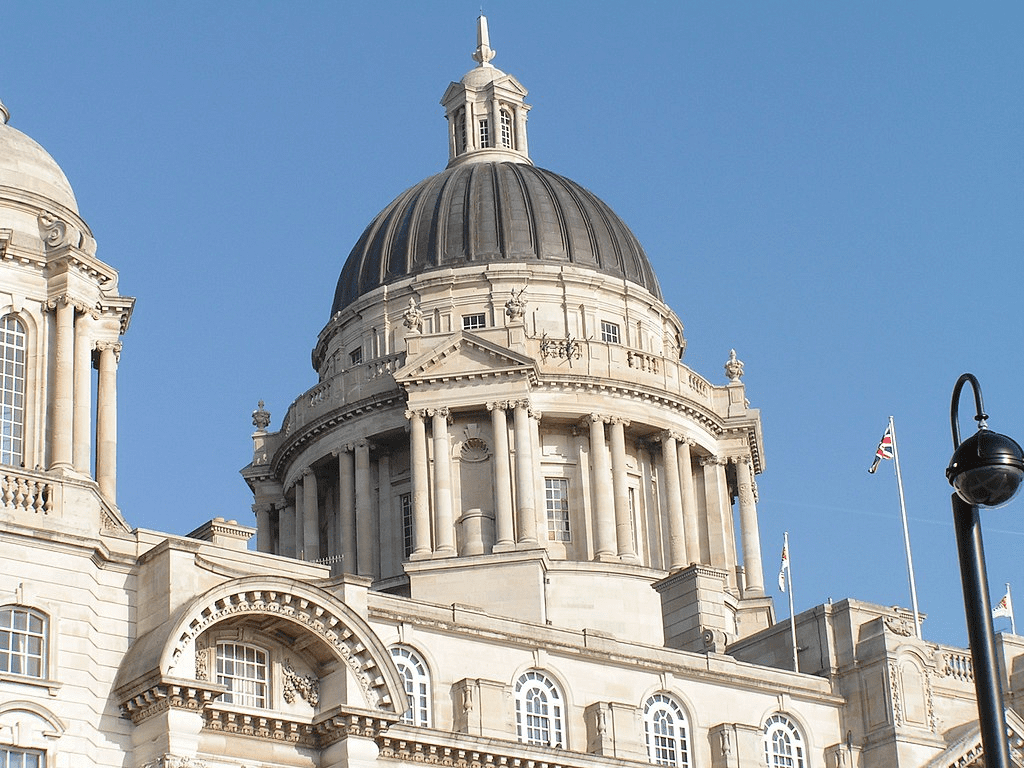
The building’s dome deserves special attention. It effectively completes the vertical composition, adding a sense of solemn monumentality to the structure. Its shape is somewhat reminiscent of the domes of Renaissance cathedrals, but here it is reinterpreted for a civil building.
The dome visually elevates the building above its surroundings and makes it easily recognisable even from a distance. Initially, the idea to create a dome was seen as wasteful, as some believed that a building’s architecture should be dominated by practicality, not aesthetics. However, the dome ultimately gave the building greater grandeur.
Finishing and decor
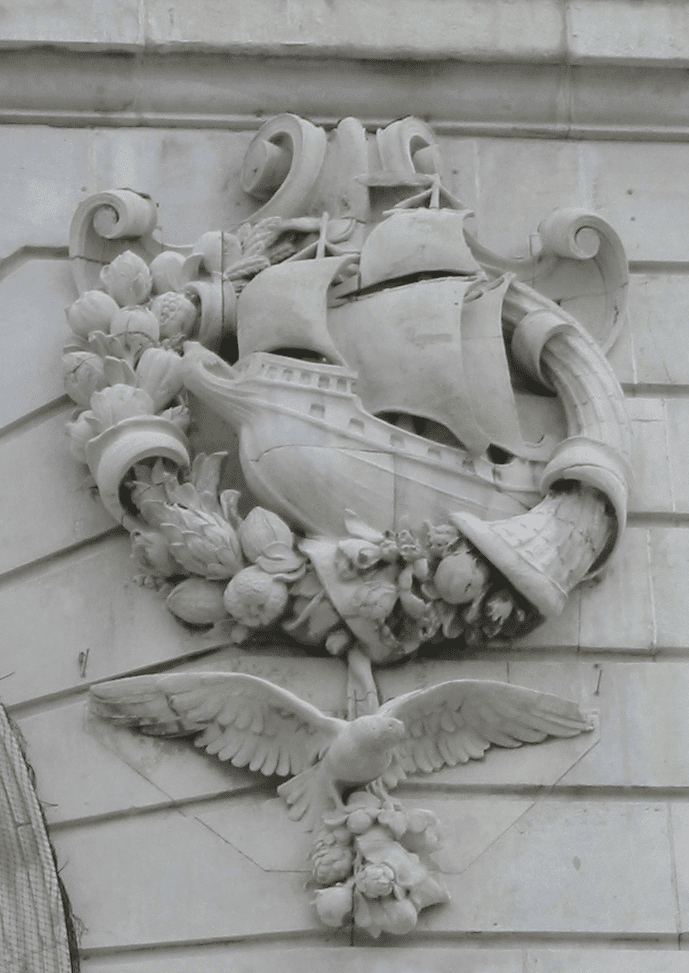
The materials used in the creation were white Carrara marble, Danzig oak, mahogany (in the meeting hall), bronze fittings, and decorative glass. The architects decided to create beautiful decor, including bronze gates with images of a globe and dolphins, light fixtures in the shape of Neptune, and stained glass with the coats of arms of British colonies.
Portland stone
Portland stone plays a special role in the exterior of the Port of Liverpool Building. This light-coloured limestone, quarried on the Isle of Portland, gave the facades their characteristic pale hue and noble texture. The stone stands up well to the maritime climate with its humid air and salty sea spray. The building has retained its stunning appearance more than a hundred years after its construction.
Interior: An atmosphere of maritime adventure
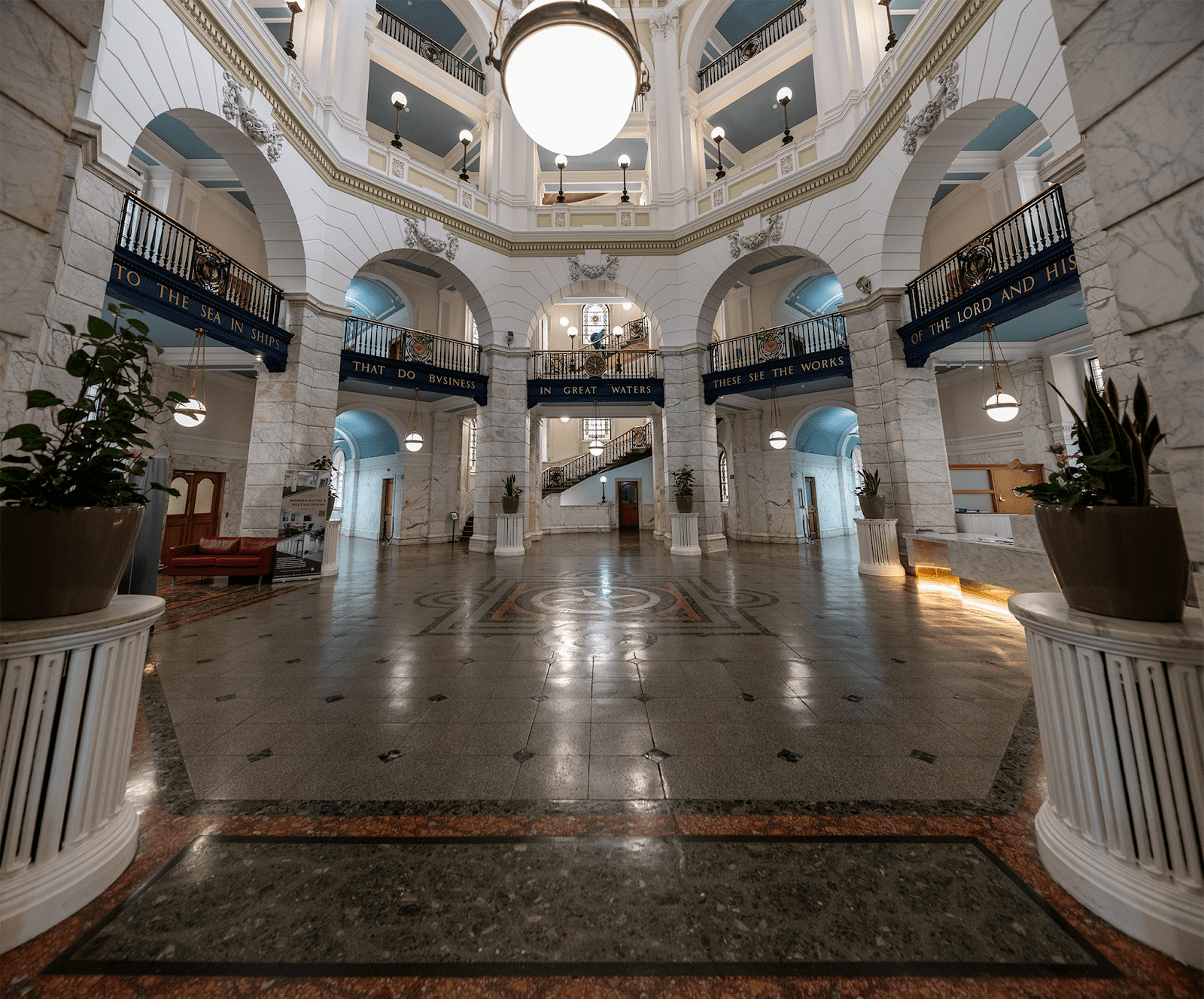
Upon entering the Port of Liverpool Building, it’s hard to shake the feeling that you’ve stepped onto the deck of a massive ship moored in the middle of the city. The grand main hall impresses with its marble columns and balustrades, which create a sense of space and light. The white and cream marble seems to evoke the waves washing the shore, while the warm tones of the wooden panels add a cosy feel—like the warmth of the holds during long journeys.
The glass elements—windows, lanterns, and decorative inserts—let in light, making the interior ‘breathe’ and change throughout the day. This light, refracting on the smooth surfaces, creates the effect of playing waves—the constant movement and change that is so characteristic of the sea. It is here that you can truly feel the love for adventure and discovery that permeates the entire building.
The maritime motifs in the interior are not limited to the general atmosphere. They can be seen in the decorative details: carvings in the shape of sea creatures, and stylised anchors and knots that adorn the doors and cornices. All of this subtly but confidently reminds you of the building’s purpose—to be the heart of maritime trade and a symbol that Liverpool is always looking beyond the horizon.
Historical trials by time and war
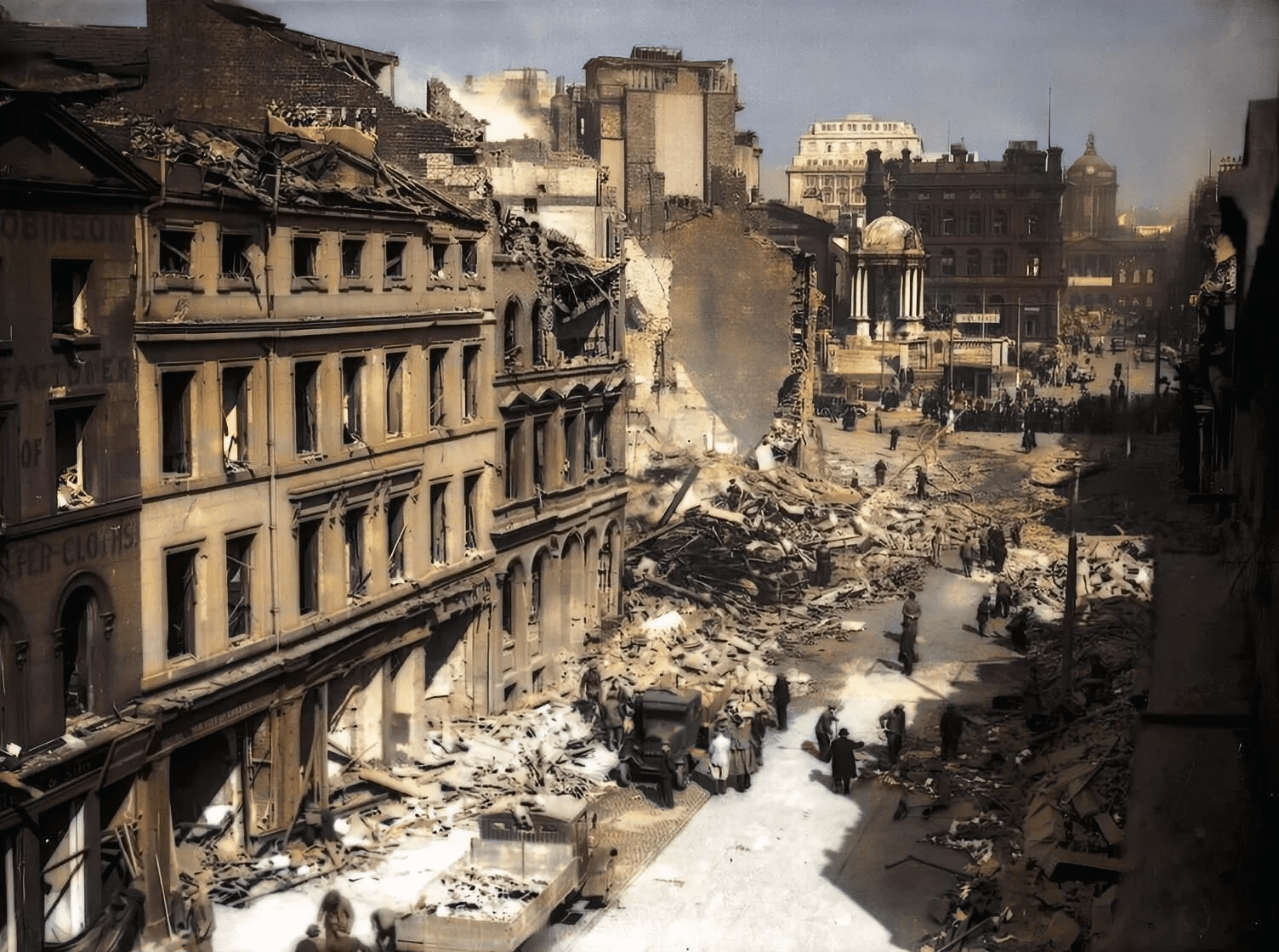
The Port of Liverpool Building has also seen some harsh trials in its time. During the Second World War, a port as important as Liverpool could not avoid intense bombings. The so-called Liverpool Blitz left many scars on the city’s map, and the Port Building did not escape damage.
During one of the air raids, the facade and roof structures were damaged. The windows and decorative elements were particularly affected. However, thanks to the inherent strength of the building—its massive walls and robust engineering—the main structure survived. This allowed for careful restoration work to begin after the war, which focused primarily on the exterior: the stonework was repaired, destroyed sculptural elements were restored, and the window systems were modernised.
It is important that the restorers sought to preserve the building’s original appearance as much as possible, so the Port of Liverpool Building today looks almost exactly as it was conceived at the beginning of the 20th century. Only a careful eye will be able to spot some of the restored areas—like scars that serve as a reminder of its courage and resilience.
What this project says about our society
The project has become a kind of mirror of the moods and aspirations of modern society. The domes, which initially caused controversy, only underlined that we live in a time when beauty is no longer defined by a single standard. The decorative elements of the facade and interior are an attempt to combine practicality with artistic self-expression.
There is no intrusive pomp here, but there is a hint that every detail has its own story to tell about openness, the search for new forms, and at the same time, respect for traditions. The controversies surrounding the architectural decisions only confirmed that we no longer want to mindlessly copy foreign architecture but strive to create something of our own—something living and deeply national. If architecture were music, this project would sound like a blend of classical and modern jazz. Or perhaps even like Merseybeat.