

Once upon a time, telephone communication was a true technological marvel that allowed people to stay in touch over long distances. Nowadays, we’re no longer surprised by it, but as a piece of history, it’s quite interesting. What was it like in Liverpool? What do we know from available sources? The answers are on liverpool-future.com.
How it all began in Britain and around the world
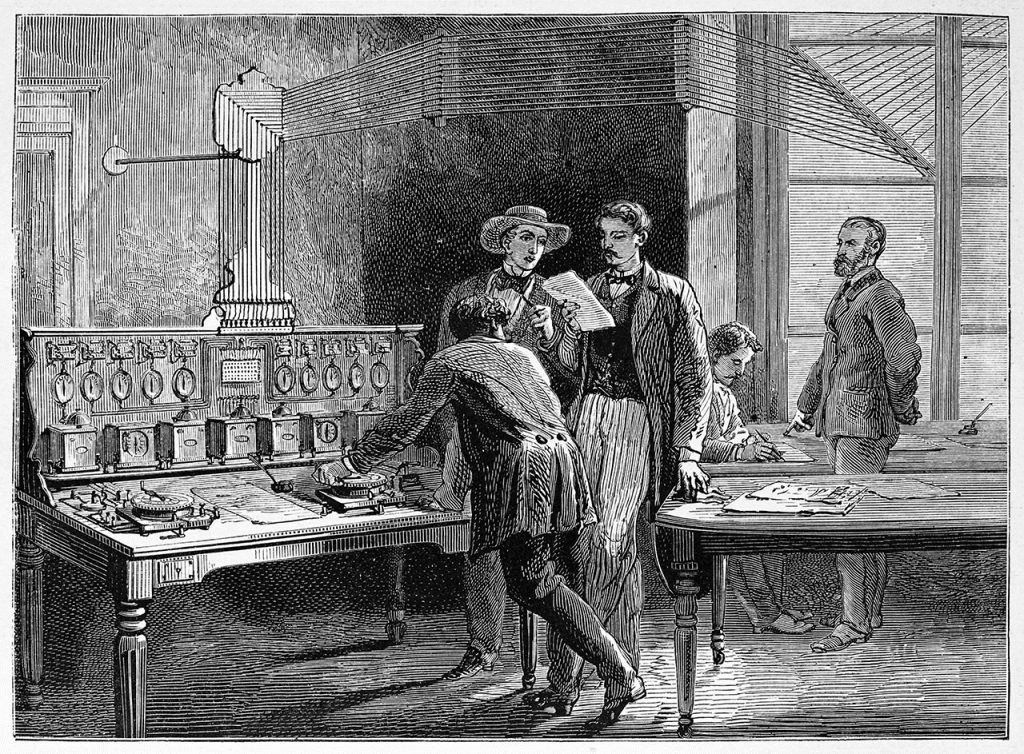
The history of telephone communication began in 1839. The world’s first commercial telegraph line was built between Paddington and West Drayton. By 9 July, everything was up and running at the most distant point, West Drayton. The equipment used at the time was invented by William Fothergill Cooke and Charles Wheatstone from King’s College in the British capital. This line also marked the beginning of the commercial use of electricity.
In 1841, Charles Wheatstone invented the first telegraph with a printing font. He also soon proposed a time-division multiplex telegraph system. This is a signal transmission technology that allows a single channel to transmit multiple signals by separating the time intervals between them. Charles Wheatstone made it possible to transmit messages from several sources on a single telegraph channel by dividing the time slots.
1849. The Electric Telegraph Company in Founders’ Court opened the world’s first central telegraph station (located in London).
In 1850, the first telegraph cable was laid between England and France, running under the sea. The cable failed after a few messages, but the following year’s attempt was more successful.
1870. The Post Office took control of Britain’s telegraph service, a move facilitated by parliamentary acts in 1868 and 1869. This was a necessary step, as the existing telegraph companies were only interested in the business centres of large cities, whereas the state wanted these services to be available throughout the country.
Making the work easier was the fact that many telegraph lines ran alongside railway tracks. In gratitude, the Post Office allowed railway companies to send railway-related telegrams free of charge until 1969.
All of this, one could say, laid the groundwork for the laying of telephone lines. In 1875, Alexander Graham Bell, a Scot by birth, working with Thomas A. Watson in Massachusetts, created the first telephone in Boston.
The history of telephone lines in Liverpool
Now, let’s talk about what is known about Liverpool in the context of our topic. The main source of pride is that England’s first vertical telephone switchboard was installed by the Western Electric company right in the main city of Merseyside.
Unfortunately, only fragmented historical records of telephone lines in Liverpool have survived. Here are some of the known facts.
1885. Trials for long-distance telephone calls took place between Liverpool and London. Telegraph lines were used, and the county capital of Merseyside was one of two cities where loudspeakers were placed.
1909. The Post Office purchased wireless stations, and Liverpool was one of the cities where they were located.
1910. A trunk telephone cable was laid between Liverpool and Manchester. That same year, a wireless message was used for the first time to apprehend a murderer.
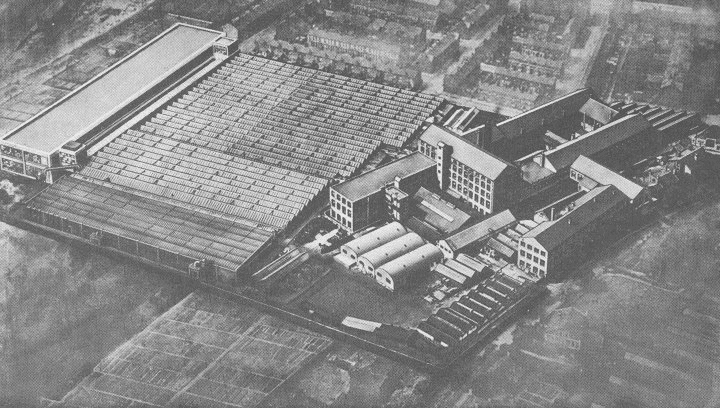
1911. The Automatic Telephone Manufacturing Company Ltd (ATM) was founded on Milton Road, Edge Lane, Liverpool. The company became the first manufacturer of automatic telephone equipment in the UK.
1912. The first automatic telephone exchange was opened in Epsom. The Liverpool-based Automatic Telephone Manufacturing Company Ltd created and installed the two-wire Strowger equipment.
1914. The telephone line between Liverpool and Manchester was officially opened.
1915–1916. The British Post Office opened the London-Birmingham-Liverpool cable network. The Post Office used amplifiers on telephone circuits for the first time. Experimental repeaters were installed on the London-Belfast and London-Dublin lines in Liverpool. Soon after, the first permanent vacuum-tube repeaters were installed on the London-Liverpool cable in Birmingham. This was the first commercial use of such equipment.
1922. Problems with the Strowger system began to be discussed, as large cities like London had many large exchanges. The huge number of inter-exchange calls created certain difficulties. There were several options to solve the problem, but the aforementioned Liverpool firm, ATM, came to the rescue. In conjunction with the Post Office, it developed the Director system with a means of storing and translating numbers. Now, even in large cities, telephone calls could be routed through a complex network of communication channels between exchanges.
1929. Liverpool was featured in a conference call system that consisted of transmitters and loudspeakers.
1971. Liverpool was one of six British cities that could make a direct call to any part of mainland USA by dialling 0101, followed by the US city code and the local number.
The following years
In the decades that followed, Liverpool’s telephone lines played a huge role in the lives of the city’s residents. But their era ended when another innovation appeared: mobile communication. However, it’s clear that the development of our technological future would have been impossible without the previous inventions in which Liverpool played a key role.