

Is anyone surprised by a telephone in today’s world? Probably not. Telephones and various gadgets are an integral part of our lives, and it’s hard to imagine work, education, or leisure without them. However, it wasn’t always this way. Liverpudlians communicated using the post, and then telephone communication gradually began to appear. Of course, not everyone had a telephone, but over time, they became more popular and accessible. The city even got its own manufacturer of telephone exchanges: the Automatic Telephone and Electric Company. Today, we’ll talk about the history of this company and learn more about the introduction of telephony in general. Read more about it on the liverpool-future.com website.
History of the company
The Automatic Telephone and Electric Company was founded in 1911 to create automated Strowger telephone exchanges. Its predecessor, The Telegraph Manufacturing Company, started much earlier, in 1884 in Cheshire. In 1892, the instruments and telephones manufacturing division moved to the city of Liverpool. Production expanded and moved to the outskirts of Liverpool in 1908.
At that time, the British telephone system was managed by a government department, the General Post Office, which installed several types of automatic exchanges, including the ATE SXS and an official switchboard.
In 1923, the SXS system was adopted for small and medium-sized British installations, but it was not suitable for London and other major UK cities. At the time, the capital was served by 80 local exchanges. For several years, both manual and automatic exchanges operated there.
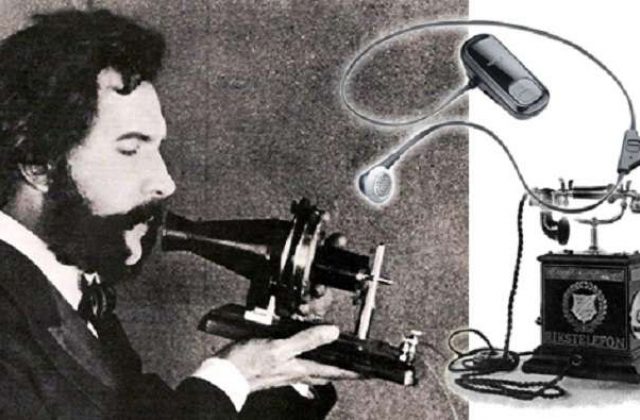
The rise of telephony
The Western Electric Company proposed using panel or rotary systems. However, the Automatic Telephone and Electric Company developed the Director telephone system, where the director performs the same function as a registrar in the Western Electric system. This meant that the routing of a local call no longer depended on the number dialled, and the London number format was also preserved.
It is said that some of the circuit’s details were designed in the dining carriage of a train from Liverpool. On 12 November 1927, London’s first Director exchange, Holborn, was opened, and the system was subsequently installed in other major British cities.
As for production, it was distributed among several British firms through a patent pool: ATE, Siemens, the General Electric Company, Standard Telephones and Cables, and the local branch of Western Electric.
In 1920, the company became part of the International Automatic Telephone Co, and its name changed accordingly. In 1932, there were further changes and a new name—Automatic Telephone and Electric Co. In 1961, the company became part of Plessey.
The first telephones
Alexander Graham Bell is the person credited with inventing the telephone. He was born in Edinburgh but later emigrated to Canada and then to the USA. In 1875, Bell created his first experimental telephone.
It’s worth noting that the first telephones were leased to subscribers in pairs. This meant that a subscriber had to arrange for telegraph contractors to build a line between them.
In 1891, the Strowger Automatic Telephone Exchange Company was founded and installed and opened the first commercial exchange in LaPorte, Indiana. The first exchanges were trialled in England in 1912.
That’s the history of the country’s telephone network and the company that was so vital to its development. We hope you found our article insightful and learned a lot of new and interesting information.