
Liverpool is rapidly evolving into a modern tech hub, where innovation is born and old buildings receive a new digital life. At the very heart of Knowledge Quarter Liverpool, a space has emerged that symbolises this IT resurgence – Central Tech. What is this project and why is it important for Liverpool’s future – read more on liverpool-future.com.
What is Central Tech: The Digital Heart of the Innovation Quarter
This was once an ordinary office building, known as the Liverpool Innovation Centre (LIC). It’s situated at the very core of the Knowledge Quarter – an area that brings together science, education, medicine, and technology. For a long time, LIC remained overlooked amidst the new venues appearing around it. Yet, the innovation centre’s potential was extraordinary. That’s why the decision was made not to demolish the building, but to reimagine it – preserving its structure while imbuing it with new digital meaning.
The renaissance began with an initiative from Sciontec, a company specialising in developing innovative infrastructure in Liverpool. It was Sciontec that launched the Central Tech project – a modern hub for IT companies, start-ups, and creative teams, which officially opened in 2024. The name of the facility is symbolic: “Central” – because it’s at the geographical and technological heart of the city; “Tech” – because everything here is designed for a digital breakthrough.

Central Tech spans over 1,500 square metres of space, flexibly divided into offices, co-working areas, and communal zones. The interiors have been redesigned to inspire: natural light, minimalist design, areas for informal networking and events. Both small teams of a few individuals and large projects requiring rapid scaling can work here. All of this is just a few minutes’ walk from leading universities and research centres.
Particular attention at Central Tech is paid to small and medium-sized enterprises in the IT sector. It’s part of a vibrant ecosystem that provides access to mentors, partnership programmes, and technological support. This approach not only lowers barriers to entry for businesses but also creates conditions for rapid growth. Central Tech has already begun to foster a community where each team is part of a larger movement forward.
Knowledge Quarter Liverpool: An Ecosystem for IT Breakthroughs
Knowledge Quarter Liverpool is a true catalyst for urban transformation. It’s here that most of Liverpool’s scientific, medical, and educational institutions are concentrated, shaping the city’s intellectual and technological landscape. The Quarter has become a base for interdisciplinary collaboration, blurring the lines between academia and business, science and technology. This concentration of knowledge and resources creates the conditions for innovations capable of changing the world.
Leading institutions within the Knowledge Quarter include the University of Liverpool, Liverpool School of Tropical Medicine, Royal Liverpool University Hospital, the Liverpool Women’s Hospital, and numerous research facilities. Private companies, investors, and start-ups actively enrich this academic environment, working alongside them. This symbiosis makes the Knowledge Quarter a unique platform where a new idea can quickly transition from the lab to the market.
Central Tech logically fits into this ecosystem as a practical embodiment of the area’s technological potential. It’s a place where students can launch their first start-ups alongside researchers, and IT companies can collaborate with scientific institutions. Thanks to its location and philosophy of openness, the hub is not isolated but deeply integrated into the shared knowledge environment.
How Central Tech in the Knowledge Quarter Changes the Game for Liverpool’s IT Sector
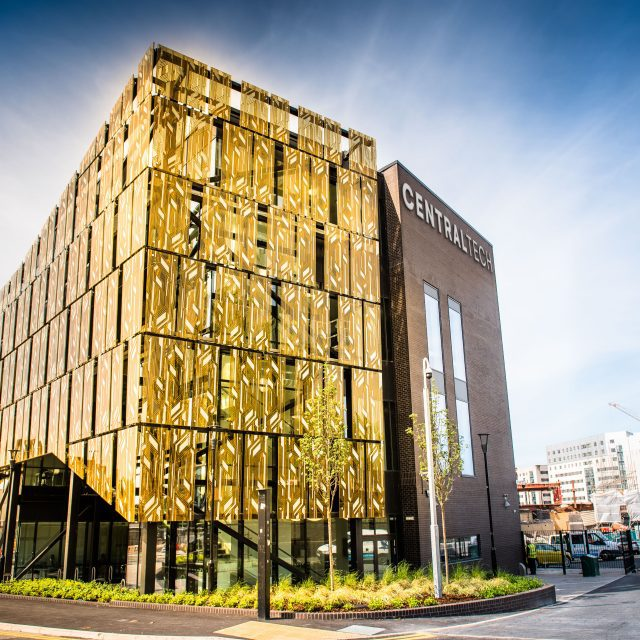
Central Tech is designed to meet the evolving needs of the IT industry – flexibility, speed, and adaptability. Offices can be easily reconfigured for teams of varying sizes, and the space can scale with business growth. High-speed internet, a modern security system, technologically equipped meeting rooms, and comfortable relaxation areas – all of this forms an infrastructure where people want to work. But the most important element is the atmosphere of openness to collaboration, experimentation, and new solutions.
The hub is ideally suited for start-ups in artificial intelligence, fintech, medical technology, the gaming industry, and software development. It is also valued by teams working on knowledge-intensive products or collaborating with universities. Its central location near major research and educational institutions allows companies to attract young talent directly from campuses. For freelancers and hybrid teams, comfortable co-working zones are provided without long-term commitments.
The presence of such an environment enhances Liverpool’s investment appeal in the eyes of venture capital funds and strategic partners. The city demonstrates that it is ready both to generate ideas and to create the conditions for their implementation. Central Tech serves as proof that Liverpool is not a periphery of the British technology scene, but a full-fledged player with its own IT identity.
Furthermore, it is precisely this cultural openness and technological environment that make Liverpool particularly attractive for innovation – consider, for example, the Look Photo Biennial, an event that transforms the perception of photography. In the long term, this could strengthen the regional economy and solidify the status of the Knowledge Quarter, which is considered a kind of magnet for future technological achievements.

