

The churches of Liverpool have a majestic appearance. In their diversity, the city’s sacred buildings surpass many others, even London’s ones. The Greek Orthodox Church of St Nicholas is rightfully considered one of the most noticeable gems of the Merseyside centre. Still, we should not forget the main purpose of the building, as first of all, it is a religious centre for believers of the nearby community. Learn more about the history and architectural features of this church at liverpool-future.
Construction and historical changes
The construction of the Greek Orthodox Church of St Nicholas, which was originally Anglican, began in the 1860s and was completed in 1870. Then the local community was devoted to the main church in England. Its construction was absolutely necessary because the port city was developing rapidly. The more people lived in Liverpool, the more places were needed for pastors to teach parishioners.
Interestingly, St Nicholas is considered the patron of sailors. Therefore, it wasn’t surprising that the church of the port city was named after him.
When Liverpool’s demographic structure underwent changes in the 20th century, the Anglican parish in the area began to decrease in number. In the 1960s, the church was transferred to the Greek Orthodox community, which was looking for a venue to hold services. This was an important stage in the history of the church, as its interior space began to adapt to the needs of the new religious direction. Part of the interior was changed to please the representatives of the Greek Orthodox religion.
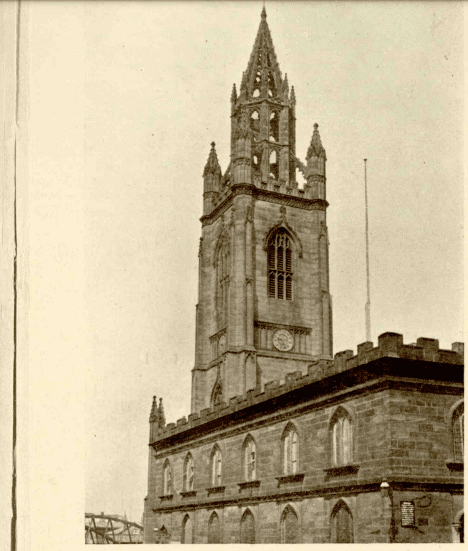
This is the only Orthodox church in Liverpool. The unique architecture of the building is inspired by the Greek tradition. It was built by local merchants who moved to Liverpool. The religious building was modelled after the former Church of St. Theodore in Istanbul, now known as the Vefa Church-Mosque.
Architectural features
The original building featured the neo-Gothic elements typical of the Victorian era: pointed windows and arches as well as a massive bell tower. Byzantine motifs can be seen in the modern facade. The tower of the church, which dominates the composition, has a pointed roof, typical of British Gothic of the second half of the 19th century.
The interior space underwent significant changes after being transferred to the Greek Orthodox community. Thus, the iconostasis was made of dark wood and with gilded elements. These objects of worship were clearly different from what Anglicans were used to.
The Byzantine style in England. Just think of it! In addition, the walls were decorated with ornaments similar to what can be seen in Orthodox churches in Eastern Europe.
Another interesting feature is the use of marble interior elements. Part of the floor was replaced during the large-scale restoration in the 1980s. The wooden benches were also replaced, reflecting the general trend of adapting sacred buildings to new traditions.
Current state
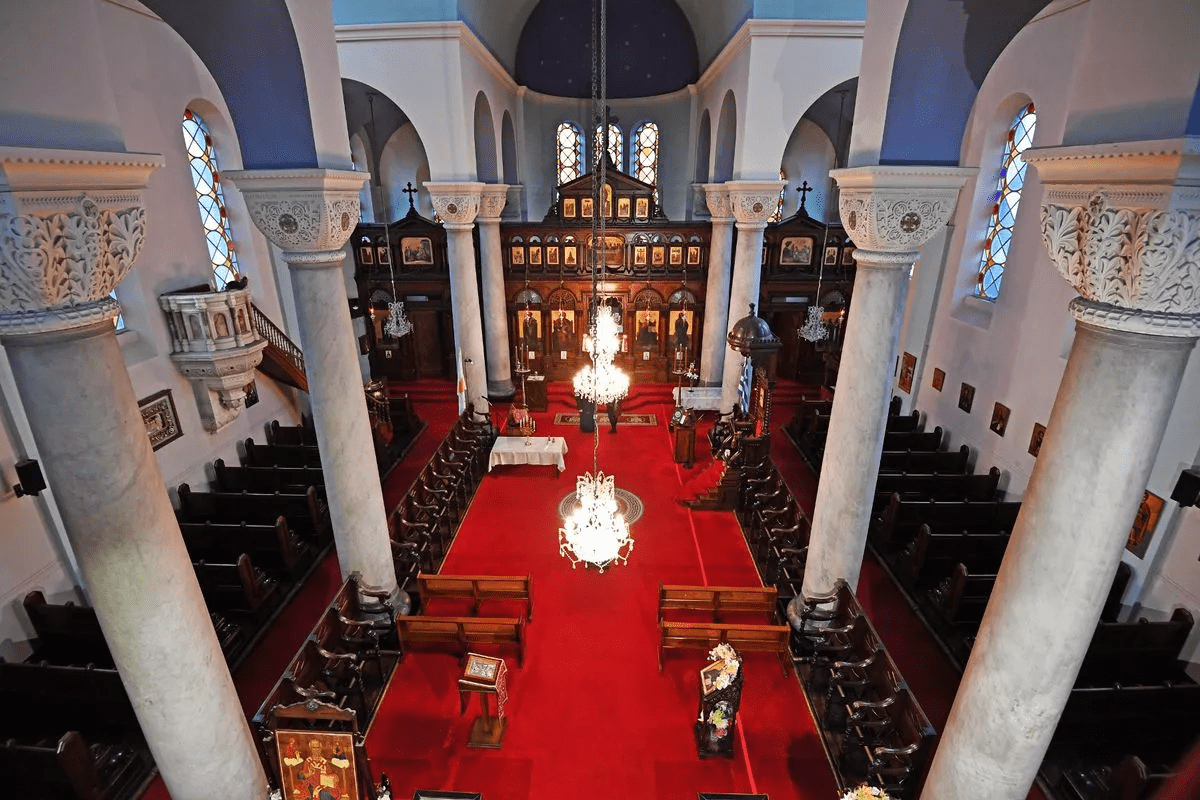
Today, the Greek Orthodox Church of St Nicholas continues to play an important role in the life of the Liverpool Greek Orthodox community. It has also become a cultural centre holding meetings, celebrations and educational events. Parishioners maintain the church in good condition. Restoration work also helps to preserve its historical and artistic value, which can be compared to the role of the Albert Salthouse Bridge.
Liverpool’s Greek Orthodox Church of St Nicholas is a unique architectural object combining the heritage of Victorian Britain and the Greek Orthodox tradition. Its history reminds us that changes in the views of the population and internal migrations can affect the appearance of religious buildings and therefore the style of their architecture.