

Sir Bennett Melvill Jones was a professor of aeronautical engineering at Cambridge University from the period between the world wars until shortly after the second (1919–1952). Jones understood the importance of optimising aircraft design and proved it. Read on at liverpool-future.com to learn more about this brilliant designer, his achievements, and how he contributed to the development of innovation.
His greatest achievement
Even in the time of the great ancient scholar Aristotle, it was known that a moving body passing through air or liquid encounters aerodynamic resistance. The ideas of another inventor, Louis Charles Bréguet, needed to be refined and formalised into a scientific theory. Melvill Jones understood this perfectly and developed his colleague’s ideas to prove how crucial drag is for a plane’s aerodynamic performance. His work ultimately advanced the entire field.
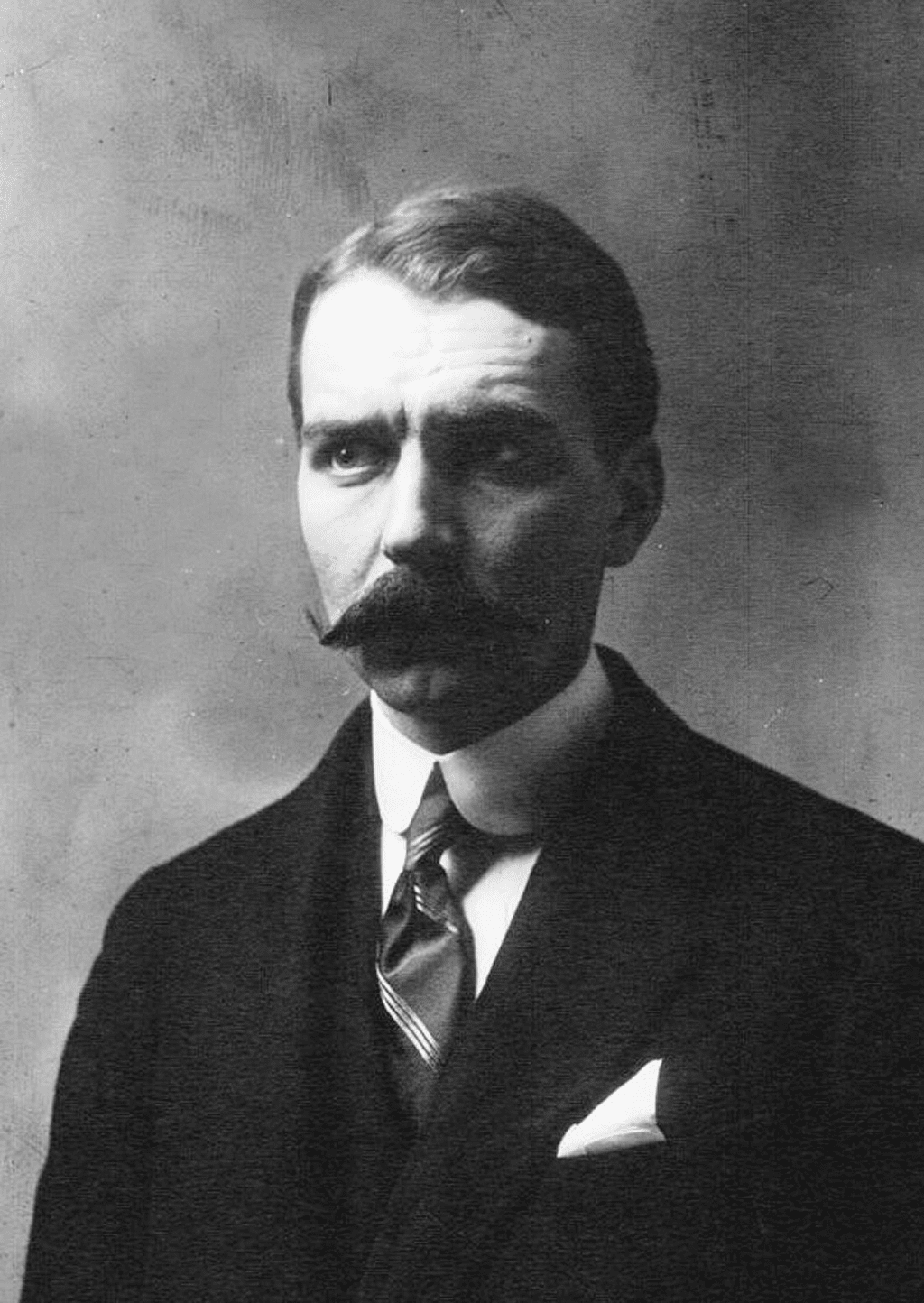
Origin and education
Benedict Jones, a lawyer, had three sons, and Melvill was the eldest. For a time, Benedict served as the mayor of Birkenhead, the birthplace of the future inventor. However, Jones was not born in Birkenhead itself, but in its suburb of Rock Ferry, in 1887.
Melvill Jones first attended a preparatory school in Rock Ferry before transferring to Birkenhead School, where he studied from 1898 to 1906. The headmaster there was quite a reasonable man and allowed Melvill to give up cricket in favour of working on engineering projects with his father. He then continued his education at Emmanuel College, Cambridge, studying “mechanical sciences,” and graduated with honours in 1909.
Early career and military service
After university, Jones took a job at the Royal Arsenal in Woolwich, where he stayed until early 1911. He then joined the aerodynamics department of the National Physical Laboratory in Teddington and later, Armstrong Whitworths, where he worked on airship design until the outbreak of the First World War in 1914.
Melvill Jones was then seconded to the Royal Aircraft Factory, later renamed the Royal Aircraft Establishment. Until 1916, he worked on aerial gunnery. Following that, the inventor was transferred to the Orfordness Experimental Station. There, Melvill learned to fly, which gave him the opportunity to serve as a gunner for six weeks in 1918. At the time, his younger brother, Benedict Henry, was a pilot serving nearby in the same squadron but was tragically killed that same year during an experimental flight.
After the First World War
In March 1919, Melvill Jones returned to Cambridge and his familiar Emmanuel College, where he joined the faculty of engineering. In October, he was elected as the first Francis Mond Professor of Aeronautical Engineering. The inventor from Birkenhead held this position until 1952, when he retired.
At Cambridge, the Ministry of Aircraft Production provided flying equipment, including planes, helicopters, and research drones, to develop a successful school of aeronautical research. With his characteristic modesty, Jones said he wanted his small team (of about four people) to work with him, not just for him. The talented Merseyside native worked on the problem of aerodynamic stall, which is when an aircraft loses the ability to stay in the air. He was able to make the necessary adjustments to aircraft design, which ultimately led to a significant decrease in crashes.
From 1926, Jones worked mainly on reducing drag. In 1929, his paper “The Streamline Airplane,” presented to the Royal Aeronautical Society, produced stunning results. The inventor from Birkenhead proposed the idea of an ideal streamlined aircraft with minimal drag, which led to the concept of the “clean” monoplane with a retractable undercarriage.
It was a real turning point in aerodynamics during the propeller-driven aircraft era. What most shocked the designers of the time was that Jones’s paper included a graph showing the relationship between required power and speed, comparing a real aircraft to an ideal one.
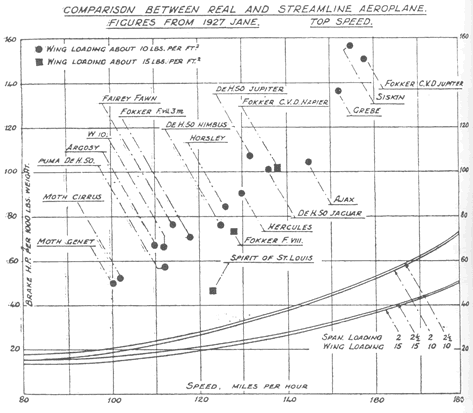
By looking at the data for a specific aircraft and extending it horizontally to the ideal curve, you could see the increase in speed at the same power. When Jones finished his presentation, one of the listeners described his findings as being of similar importance to the Carnot cycle in thermodynamics.
Second World War
As the Second World War approached, our subject was asked to return to work on artillery. One of the scientist’s most notable developments was a gyroscopic gunsight, which took four years to develop.
In 1943, Melvill Jones moved to the Ministry of Aircraft Production and became the head of the Aeronautical Research Committee. In 1946, he resumed his work on drag. By then, the inventor was getting on in years, so he retired soon after. But he didn’t rest on his laurels and became a consultant for the Royal Aircraft Establishment, helping to make planes faster and safer.
Even before his death in 1975, Jones was recognised for his achievements. For example, in 1938, he was appointed a Commander of the Order of the British Empire, and in 1947, he was awarded the US Medal of Freedom. The scientist’s contribution to aviation is comparable to the contribution made during the First World War by a soldier with the same surname, David Jones.