

Sebastian Ziani de Ferranti was a British electrical engineer who created a dynamo machine named after him and helped establish large-scale electricity generating stations and alternating current (AC) distribution networks in England. His Deptford Power Station project was also a great achievement for the Liverpool-born inventor. His work earned him not only recognition from his compatriots and the state but also a place in the “Innovations” section of the liverpool-future.com website.
The early life of a genius
Sebastian Ziani de Ferranti was born in Liverpool on 9 April 1864. Although he died in Zurich, Switzerland (1930), the engineer is considered a Merseysider and is a source of great pride for the region, which also produced other outstanding individuals like Henry Booth.
The name Ferranti doesn’t sound typically English. And you’ve probably guessed that Sebastian’s father, Cesare, was Italian by nationality. His profession was photography, and his father, Marco Aurelio Zani de Ferranti, was a composer. The inventor’s mother, Giuliana, was also involved in music; she played the piano well and gave concerts. Sebastian was also a creative person with a talent for painting, but his love for technology ultimately won out. It all started with experiments with steam engines.
The subject of this article had the opportunity to study at St Augustine’s College in Ramsgate, as well as at Hampstead School and University College in London. However, he did not finish the latter due to the premature death of his father and the financial difficulties that followed. But the boarding school in Ramsgate gave him a lot—the staff greatly encouraged the boy to experiment and also introduced him to the science of lighting.
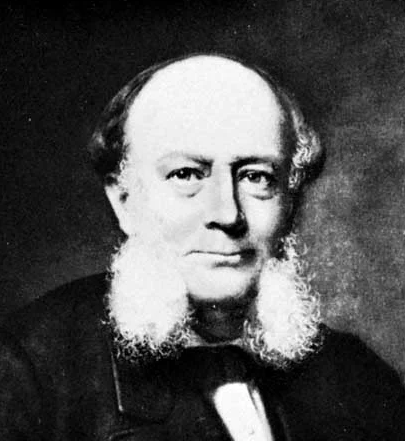
After his studies, Sebastian had the honour of assisting Sir William Siemens in his pioneering experiments with electric furnaces and dynamo machines. There, he designed the armatures for alternating current generators.
Early inventions
Ferranti proved himself to be a capable innovator from childhood. His first invention at the age of 13 was an arc lamp for street lighting.
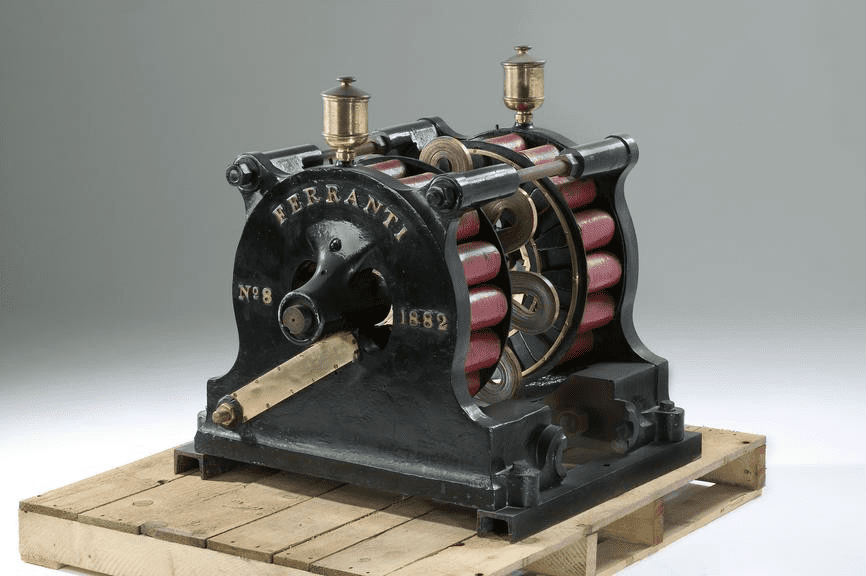
At the age of 18, Ferranti patented an alternating current generator with a zigzag armature, which he had designed when he was just 16. The invention was named the “Ferranti dynamo.” As it turned out, the possibility of creating such a device had been foreseen earlier by Sir William Thomson, who later became Lord Kelvin. Even this outstanding British physicist only grasped the idea but was unable to create such a generator. But the Liverpudlian Sebastian succeeded. The device was compact and produced five times more energy than similar machines of the same size.
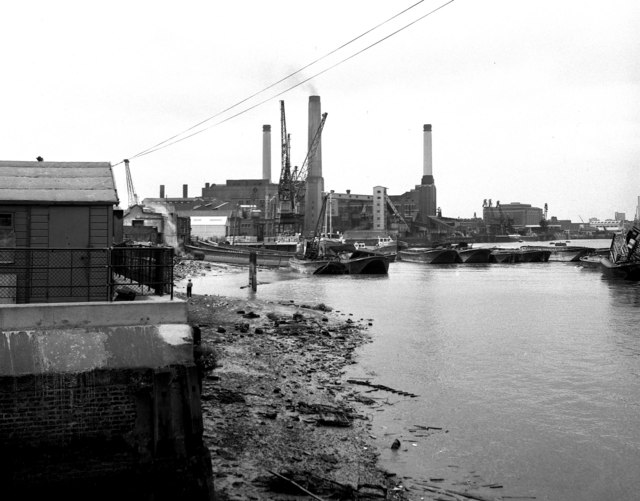
In 1886, Ferranti was appointed chief engineer of the Grosvenor Gallery Electric Supply Corporation. Under his leadership, it became one of the world’s largest companies of its kind! In 1887, advocating for the location of power stations away from city centres, the Liverpudlian designed the Deptford Power Station outside London.
The Deptford Power Station and the “war of currents”
The power station and the events associated with it deserve a separate story. It developed an electrical potential of 10,000 Volts—four times more than before.
Working as the chief electrician for the London Electric Supply Corporation in Deptford, Ferranti was one of the first to advocate for the creation of large power stations and the use of electricity for various purposes—lighting, heating, and powering engines. He correctly predicted the modern “grid” system of electricity distribution and consumption. Sebastian also argued for the use of alternating current instead of the direct current proposed by Crompton. Alternating current later became the universal standard.
It is known from history that in the late 1880s, there was a debate in American industry about the methods of transmitting electricity. It became known as the “war of currents.” In this conflict, Thomas Edison supported a system based on direct current. This was likely due to the fact that he held many key patents and had built several power stations that supplied direct current. The rival company, Westinghouse Electric Corporation, supported the alternating current system.
Ferranti quickly grasped the issue and bet on alternating current. This allowed him to become one of the few experts in this system in Great Britain. In 1887, the London Electric Supply Corporation (LESCo) hired Ferranti to design a power station in Deptford. He created the design for the building itself, as well as the power station and distribution system.
Construction was completed in 1891. It was the first truly modern power station, supplying high-voltage alternating current for distribution at 10 kV, which was then stepped down for consumer use on each street. One of the towers from the Deptford Power Station is in the Science and Industry Museum in Manchester, where the Ferranti archive is kept.
His granddaughter continues to innovate
An interesting fact. The inventor’s granddaughter, Valerie Hunter Gordon, continued her grandfather’s work in innovation, albeit in a completely different field. She invented what are considered the world’s first disposable nappies and an early sanitary towel system.
Key events in Ferranti’s life
In 1882, Ferranti opened the firm “Ferranti, Thompson and Ince” in London, which designed various electrical devices. The Liverpool-born innovator had met Alfred Thompson at the Siemens firm. Unfortunately, this company of Ferranti’s collapsed within its first year.
However, our subject did not give up. Later, in 1885, he founded another company, S.Z. de Ferranti, partnering with the same Francis Ince, as well as with Charles Sparks instead of Thompson. In 1890, it became S.Z. de Ferranti Ltd, and in 1900, when Sparks and Ince resigned, it became Ferranti Ltd. Interestingly, this firm outlived its founder and developed the Ferranti Mark 1, the world’s first commercially available general-purpose computer. This happened in 1951, at a time when science fiction writers were only dreaming of computers or machines even remotely similar to them.
In 1910 and 1911, Sebastian de Ferranti was the president of the Institution of Electrical Engineers. In 1927, he was elected a Fellow of the Royal Society. In 1912, he was awarded an honorary doctorate from the University of Manchester.
In 1911, Ferranti actively contributed to the creation of the British Electrical and Allied Manufacturers’ Association. When this organisation, known as BEAMA for short, was founded, Ferranti was its head and led it until 1913. The Liverpool-born inventor was also a supporter of the Women’s Engineering Society, in which his wife, Gertrude Ziani de Ferranti, played an important role.
Not everything in our subject’s life was easy. When the Liverpool-based engineer moved to Hollinwood, he founded two businesses—one that manufactured meters and another that produced steam generators. The first was successful, while the second faced great difficulties. Nevertheless, he continued to work tirelessly, consulting for electricity supply companies and helping with the creation of textile machinery and reheat turbines.
At the time of his death in 1930, Sebastian de Ferranti had 176 patents to his name and had played a huge role in the development of electricity.