

Today, ordinary mail doesn’t seem like an innovation, as it appears to be gradually becoming a thing of the past due to instant messaging on gadgets. However, in its time, the postal service was a very exciting and convenient innovation. In Liverpool, a major trading port, the post held a special place. Read more on liverpool-future.com.
The Post in Britain and Liverpool’s role
The British postal service is a national institution that originated in the 16th century during the reign of King Henry VII. This monarch was the first to appoint a “Master of the Post” in 1516. The position was later renamed “Postmaster General” and existed for over 450 years until it was finally abolished in 1969.
Initially, postal services were a privilege for the upper classes and were not available to the poor. However, in 1635, Charles I ensured that postal services were accessible to everyone. In the early days of the post, the recipient paid for the service, not the sender.
In 1654, Oliver Cromwell granted the Post Office a monopoly on mail delivery services in the country. In 1657, fixed tariffs for them were introduced.
In 1660, Charles II founded the General Post Office. This officially established a postal service in England. An adhesive postage stamp was introduced a year later, thanks to the innovation of the Birmingham school teacher Rowland Hill in 1837.
The first mail coaches began operating between London and Bristol in 1784. But Liverpool and Manchester made history with the first mail train, which ran on the L&M railway in 1830. This railway was created with the help of the city’s famous innovator, Henry Booth.
1838 – Money orders were introduced.
1852 – The first red post box appeared in Jersey.
1870 – The telegraph was created.
1880 – Postmen started riding bicycles.
1974 – Postcodes were introduced in Britain.
Liverpool’s General Post Office
For most of the 19th century, the General Post Office was located in the Custom House building on Canning Place. It was built between 1828 and 1839 to a design by the Liverpool architect John Foster. During the Second World War, in 1941, this building suffered significant damage, and in 1948, it was demolished.
A new post office was built even before the old building became unusable. It was opened in 1899 on Victoria Street by the Duke of York, with construction having begun in 1894. The building has a facade 226 feet long on Victoria Street, 254 feet on St. Thomas Street, and 260 feet on Stanley Street.
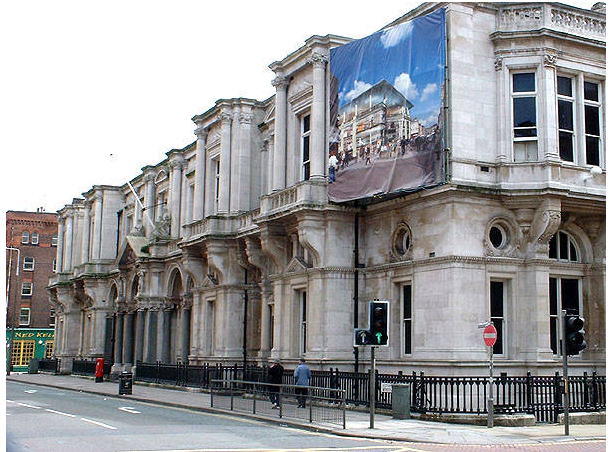
The architect was Henry Tanner, who also designed the General Post Office in Leeds. The carvings in front of the new office were created and executed by Edwin Owen Griffith. The main contractors were Messrs Thornton & Sons.
The building on Victoria Street was extremely ambitious and initially resembled a castle. The plot covered almost two acres of land. In front of the second floor are four figures representing England, Scotland, Ireland, and Wales, with two pairs standing, holding hands. Ten smaller figures represent the colonies. Below are figures symbolising trade and industry, as well as electricity and engineering.
The upper floors of the building were demolished after the same Blitz bombings in the 1940s. The interior survived longer, until the end of the 20th century, but today we can no longer see what the inside of the building looked like in the beginning. The building is considered completely fireproof due to the fact that very few wooden structures were used in its construction.
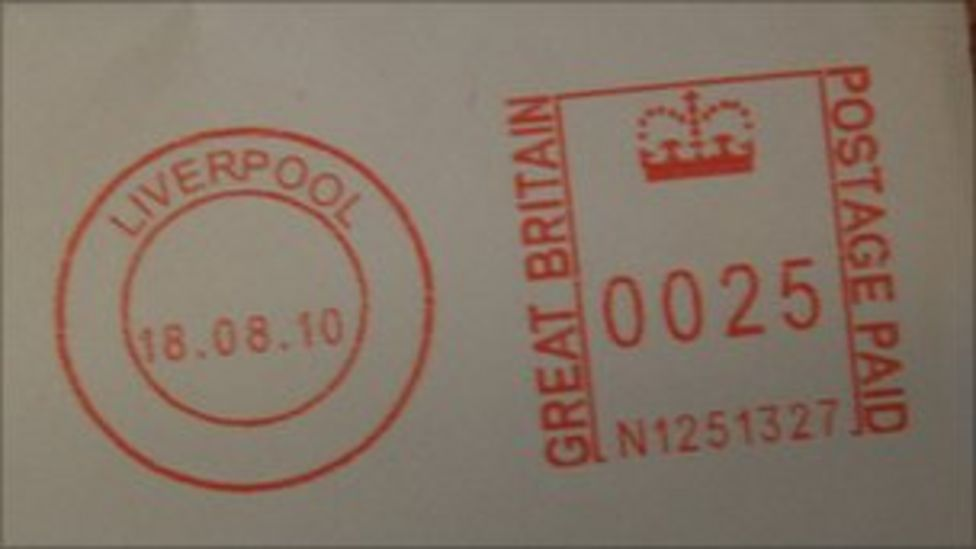
In 2010, it was announced that the Royal Mail was closing its last sorting office in Liverpool, and all letters would now be sent via Warrington. This led to the disappearance of the Liverpool postmark, the second oldest in the UK, after 300 years of history. The decision was made after several months of consultation as part of a reorganisation of the operational infrastructure.